Villagers: a character-first medieval town-builder with population simulation
Villagers, developed by bumblebee., is a medieval town-building and people simulation that asks players to found and manage a small settlement. Players assign professions, balance basic supplies, and expand infrastructure while attending to individual needs and household growth. The game highlights a sophisticated villager AI that tracks relationships and a lighthearted stork mechanic for births. Fans of methodical city-building and character-driven management will find focused, scenario-led play with organic population systems.
What kind of game is Villagers?
In this game you manage a compact medieval settlement through an explicit resource and labour loop. The design centers on constructing and assigning roles across 27 building types and 16 professions. Core resources are managed directly:
- food
- water
- wood
- stone
Does it include separate play modes and how is multiplayer handled?
In this game there are two principal play options, a structured Story Mode and an open FreePlay. Story Mode contains six chapters that stage scripted challenges, while FreePlay supplies six maps with full access to buildings. The title is single-player only, so all economy and population management runs locally without networked matches or co-op.
What does the game look and sound like?
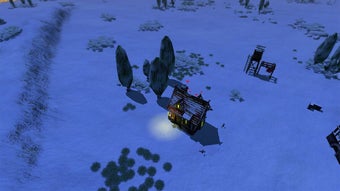
In this game presentation is a deliberate part of the design: hand-illustrated art and a calm audio atmosphere give the settlement a distinct personality. Dialogue elements appear frequently during scenarios, shaping pacing and decisions. Players frequently highlight the visuals and relaxing tone, while reports note occasional technical instabilities that interrupt that calm.
Is the start-up curve steep and does the game keep you playing?
In this game challenge comes from resource balance and scenario demands rather than complex controls. The six scenario missions present explicit obstacles such as illness, bandit raids, and extreme weather. Progression depends on unlocking new production chains and placing specialised buildings. FreePlay supports longer runs, though some players cite limited long-term depth compared with larger titles; platform support spans older Windows releases with modest CPU and RAM requirements.
A practical recommendation based on design and scope
The game suits players who prefer small-scale, character-focused town management and scenario-driven sessions. However mixed player reports about long-term depth and occasional technical issues make it less appropriate for those seeking expansive endgame systems. For players who value personality, village-scale decisions, and short-to-medium campaigns, it is worth trying as a compact simulation experience.